

CATARACT

CORNEA

GLAUCOMA

LASIK & PRK

ROUTINE EYE EXAMS

URGENT CARE
CATARACT SURGERY
What is a Cataract?
The lens inside the eye allows us to see our world clearly. When the lens becomes cloudy, our world is no longer clear. A cloudy lens is called a cataract. When the cataract begins to effect our daily activities like reading or driving, it is time to have it removed. It can be removed in a procedure performed in the operating room. This procedure, called cataract surgery, is usually performed in around twenty minutes. Light sedation is used to keep you comfortable and relaxed. You will usually go home the day of surgery.
During cataract surgery, the cloudy lens is replaced with a clear, artificial lens. This allows you to see objects clearly. If you have astigmatism, you may still need glasses to see clearly in the distance. A toric lens is a special lens that allows you to see clearly if you have astigmatism. Your surgeon will perform a test that measures the steepness of the cornea. This test, called a topographic corneal map, will determine if you have astigmatism that can be corrected with a toric lens.
Certain patients have the option of choosing a lens that will allow them to see clearly in the distance and at near. Not every patient is a candidate for this lens. Ask your ophthalmologist if an “extended depth of vision” or “multifocal” lens is right for you.
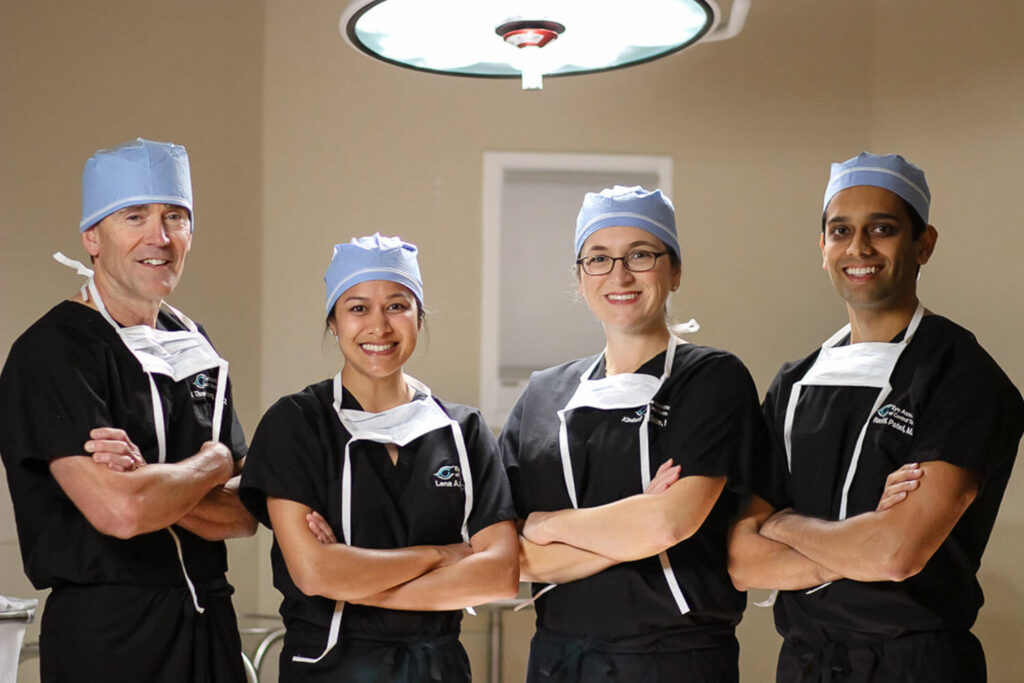
Our Board Certified Cataract Surgeons, Dr. W. T. Kittleman, Dr. Kimberly Golde, Dr. Lena Dixit, and Dr. Ravi Patel will provide the highest quality of care for you and your family members. Make an appointment with our surgeons today to discuss what options are best for your individual needs and lifestyle.
OPTIONS
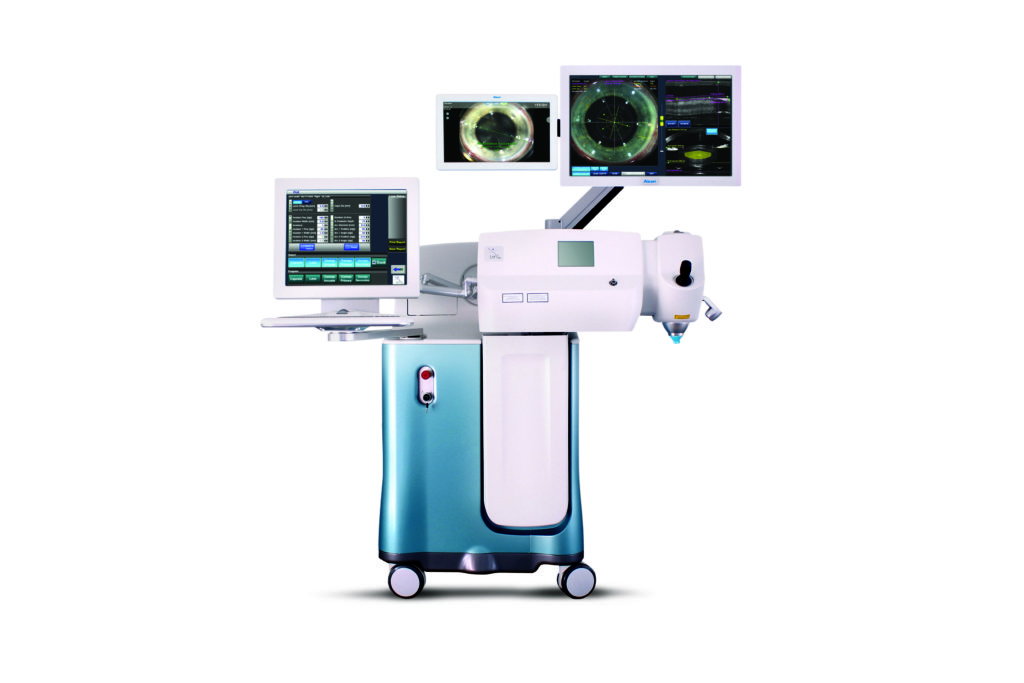
LensX Femtosecond Laser by Alcon
Femtosecond Laser Cataract Surgery
Types of Intraocular Lens Implants
There are many choices when it comes to intraocular lens implants. A Monofocal lens is the most commonly used lens and allows patients with minimal astigmatism to achieve clear vision at either distance or near. Many patients will choose to have both eyes corrected for distance vision, which means they will still need reading and computer glasses.
Monovision
With a Monofocal lens, one can choose an option called “monovision” in order to minimize glasses wear at distance and intermediate ranges. Monovision means that one eye is corrected to focus on a distance target, and the other eye is corrected to focus on a near target. This is well-tolerated by many patients, particularly those who wear contact lenses or have had previous laser vision correction for monovision.
Toric Lens for Astigmatism
A Toric lens is an option for patients with astigmatism who are interested in becoming glasses independent for certain ranges of vision. The astigmatism correction is built into the Toric lens that is implanted at the time of surgery. A Toric lens does not correct all ranges of vision; therefore, over-the-counter reading glasses may still be needed. It is important to know that not everyone may be a good candidate for these lenses. Ask our Board-Certified Cataract Specialists if you are a candidate today.
Multifocal or Extended Depth of Focus Lenses
Multifocal or Extended Depth of Focus (EDOF) lenses are options for patients who wish to be glasses-free at all ranges. These lenses allow you to see at distance and at near. Additionally, these lenses can also correct astigmatism. Strict criteria are required to qualify for these lenses. It is important to know that not everyone may be a good candidate for these lenses. Ask our Board-Certified Cataract Specialists if you are a candidate today.
CORNEA & EXTERNAL DISEASE
What is the Cornea?
The cornea is the clear window in front of your eye that focuses light and allows you to see.
Corneal Transplant Surgery
- Pentrating Keratoplasty (PKP) is a full thickness corneal transplant. This is performed when multiple layers of the cornea are cloudy or unhealthy.
- Descemet's Stripping Endothelial Keratoplasty (DSEK)is a partial thickness corneal transplant. This is performed when only a few layers of the cornea need to be replaced. Fuch's Dystrophy or Bullous Keratopathy are diseases that may require a partial corneal transplant.
- Descemet's Membrane Endothelial Keratoplasty (DMEK) is the newest type of partial thickness transplant. It only replaces 1 layer of the cornea and has the fastest recovery time.
- Deep Anterior Lamellar Keratoplasty (DALK) is a partial corneal transplant reserved for anterior corneal scarring or Keratoconus.

Dr. Lena Dixit and Dr. Ravi Patel of Eye Associates of Central Texas are Board-Certified and fellowship trained in Cornea and External disease. Both Dr. Dixit and Dr. Patel studied at Bascom Palmer Eye Institute, the top-ranked eye hospital in the nation. They specialize in the most current and advanced corneal procedures available. Dr. Dixit and Dr. Patel are amongst the few cornea, external disease, and refractive surgery specialists practicing in this area.


LASIK & PRK
transform vision into reality
What is a Refractive Surgery?
Refractive surgery, such as LASIK and PRK, corrects nearsightedness, farsightedness and astigmatism, allowing you to be glasses-free. We are proud to offer Custom Wavefront-guided LASIK and PRK, state-of-the-art technology that creates a unique treatment based on a measurement that maps how your eye sees a single point of light – a treatment as unique as your fingerprint.
Eye Associates of Central Texas offers the highly advanced IntraLase Method. IntraLase is the same as LASIK; however, instead of a blade creating the flap in the cornea as with LASIK, a special laser creates the flap during IntraLase. IntraLase is commonly referred to as “blade-free” or “all-laser” LASIK. With IntraLase, LASIK is completely blade-free and safer than ever. The IntraLase FS laser is the first technology for a truly all-laser, blade-free LASIK procedure, replacing the hand-held microkeratome blade historically used in creating LASIK corneal flaps – the first step of the procedure – with a computer-guided, ultra-fast femtosecond laser. The IntraLase laser virtually eliminates the majority of the most severe sight-threatening LASIK complications related to use of the microkeratome and, by creating an optimal corneal surface below the flap, provides for better visual outcomes. IntraLase is the LASIK advancement you’ve been waiting for.
LASIK vs PRK
Laser-assisted in situ keratomileusis (LASIK) is a type of refractive surgery that utilizes a corneal flap. The healing process and visual recovery is quicker than PRK.
Photorefractive Keratectomy (PRK) is a type of refractive surgery that does not require a corneal flap, therefore has a slightly lower side effect profile. This is a great option for highly active individuals who wish to be glasses-free.
REFRACTIVE LENS EXCHANGE
Refractive lens exchange, or clear lens exchange, is an intraocular surgery that removes the natural lens in your eye and replaces it with a prescription artificial lens. This allows you to reduce the need for glasses or contact lenses in individuals that have high hyperopia or myopia. Ask your surgeon if you are a candidate today.
GLAUCOMA
GLAUCOMA
What is Glaucoma?
With a Monofocal lens, one can choose an option called “monovision” in order to minimize glasses wear at distance and intermediate ranges. Monovision means that one eye is corrected to focus on a distance target, and the other eye is corrected to focus on a near target. This is well-tolerated by many patients, particularly those who wear contact lenses or have had previous laser vision correction for monovision.
Types of Glaucoma
Glaucoma is often a “silent” disease. Most people are unaware they have glaucoma unless a careful examination by an ophthalmologist is performed.
Usually glaucoma causes no pain or noticeable loss of vision until the later stages. Since vision loss from glaucoma is irreversible, it is important to diagnose and treat it before significant loss of vision occurs.
Acute angle closure glaucoma is type of glaucoma that can cause an “attack” of pain and sudden vision loss. It is more often found in people who are very farsighted. This kind of glaucoma can cause rapid onset headaches, blurred vision, halos and sometimes nausea and vomiting. An ophthalmologist can detect those who might be at high risk for this type of glaucoma at a routine eye exam and prevent these attacks from occurring. A thorough clinical evaluation can demonstrate if your eye has the microscopic anatomy that is more risky for this type of glaucoma.
Who is a glaucoma suspect?
A person who has specific risk factors for glaucoma, but has not yet shown definitive nerve damage, will need careful follow up and special testing to monitor for possible treatment in the future. Glaucoma in its early stages may be difficult to diagnose and may mimic a glaucoma suspect.
Glaucoma is one of the leading causes of blindness in the United States. Glaucoma is a disease of the optic nerve which can cause vision loss if untreated. The optic nerve carries all the images we see from the eye to the brain where perception takes place. Glaucoma is often, but not always, associated with an elevated eye pressure. Usually there is no pain with glaucoma as the eye pressure must be very high to cause pain.
Some people may have elevated eye pressures without evidence of damage to the optic nerves called ocular hypertension. Other people may have consistently normal pressures but may suffer progressive optic nerve damage typical of glaucoma, called normal tension glaucoma.
Your ophthalmologist uses a combination of clinical and diagnostic information to diagnose, monitor, and treat your glaucoma to prevent vision loss over time. At Eye Associates, our board-certified ophthalmologists will ensure that your glaucoma is well controlled and that your vision is well protected.
How is glaucoma treated?
Your ophthalmologist may use eye drops, oral medication, laser procedures, or eye surgery to treat glaucoma. The treatment depends on your individual circumstances. We will tailor your treatment to your personal needs.
You will require routine follow-up, depending on the severity of your glaucoma. Your eyes must be monitored over time because your condition may require changes in therapy based upon how quickly your glaucoma is progressing
Certain medications can cause or worsen glaucoma, so it is important you tell your ophthalmologist all medications that you are taking. We will work together with all of your doctors to ensure you have the best medical care.
Glaucoma can be very complex, but at Eye Associates, you can rest easy that your eyes and your health are in good hands. Be sure to ask your doctor any questions you may have.
Refractive surgery, such as LASIK and PRK, corrects nearsightedness, farsightedness and astigmatism, allowing you to be glasses-free. We are proud to offer Custom Wavefront-guided LASIK and PRK, state-of-the-art technology that creates a unique treatment based on a measurement that maps how your eye sees a single point of light – a treatment as unique as your fingerprint.
Eye Associates of Central Texas offers the highly advanced IntraLase Method. IntraLase is the same as LASIK; however, instead of a blade creating the flap in the cornea as with LASIK, a special laser creates the flap during IntraLase. IntraLase is commonly referred to as “blade-free” or “all-laser” LASIK. With IntraLase, LASIK is completely blade-free and safer than ever. The IntraLase FS laser is the first technology for a truly all-laser, blade-free LASIK procedure, replacing the hand-held microkeratome blade historically used in creating LASIK corneal flaps – the first step of the procedure – with a computer-guided, ultra-fast femtosecond laser. The IntraLase laser virtually eliminates the majority of the most severe sight-threatening LASIK complications related to use of the microkeratome and, by creating an optimal corneal surface below the flap, provides for better visual outcomes. IntraLase is the LASIK advancement you’ve been waiting for.
ROUTINE EYE EXAMS
illuminate the path of life
Routine Eye Exams
How do I know if I need an eye exam?
That is an answer that depends on many factors. The American Academy of Ophthalmology recommends that asymptomatic healthy patients should receive periodic eye examinations. Under the age of 40, it is recommended to have an exam every 5-10 years. From 40-54, every 2-4 years. From 55-64, every 1-3 years, and over the age of 65, every 1-2 years.
These recommendations change, based on symptoms, previous eye history, medical problems, and significant family history. For example, patients who wear glasses or contact lenses need yearly eye examinations to update their prescriptions. A patient with Diabetes should have a full, dilated eye examination at least once yearly to check for signs of diabetic retinopathy. This should start at the time of diagnosis. If there are risk factors for glaucoma, such as strong family history, it is recommended to have an exam every 1-2 years starting at the age of 40. If an ocular disease is found on your examination, follow-ups may need to be more frequent, and your doctor will advise you of the recommended time interval for re-examination.
What are we looking for?
How do I maintain healthy eyes?
We often get this question during routine eye examinations and health screenings. The most important thing you can do for your eyes is maintain good general health. Eye disease is more common among patients who smoke, have conditions like diabetes and high blood pressure, and who take certain medications such as steroids, medications for autoimmune conditions, and medications for certain infections. It is also extremely important to wear the proper eye protection. In general, polarized sunglasses are recommended while outdoors to protect the eyes from UV light. Damage from UV light can contribute to many different eye problems, including cataract, macular degeneration, pterygium, and ocular cancers. Eye protection is also required during high impact sports, such as racquetball, as well certain hobbies or professions, such as welding, grinding, and construction work.
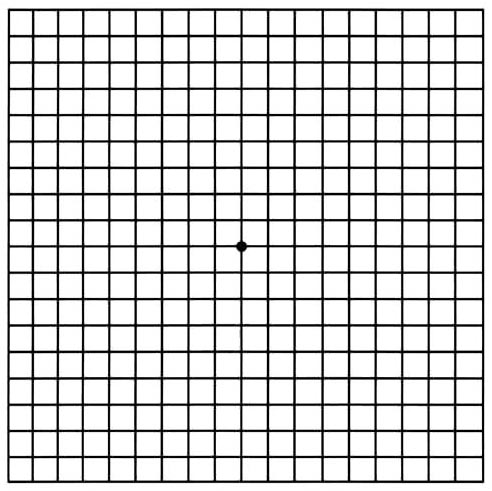
Amsler Grid for Macular Degeneration
Diabetic Retinopathy
A person who has specific risk factors for glaucoma, but has not yet shown definitive nerve damage, will need careful follow up and special testing to monitor for possible treatment in the future. Glaucoma in its early stages may be difficult to diagnose and may mimic a glaucoma suspect.
Macular Degeneration
Age Related Macular Degeneration affects a particular part of the retina called the macula. The macula is responsible for the central part of your vision. There are two types of macular degeneration, dry and wet. The dry kind of macular degeneration is a common finding amongst older adults. Early changes include thinning of the macula and deposits, called drusen. Early stages of dry macular degeneration are often asymptomatic, while more severe changes can cause central vision loss. There is no definitive treatment for dry macular degeneration, but, depending on the stage of the disease, AREDS 2 vitamins may be recommended to slow the progression. Wet macular degeneration tends to have a more profound effect on a patient’s vision. New blood vessels form, which can bleed or leak eventually causing scar formation and central vision loss. This can often be treated with intraocular injections. As with many eye diseases, outcomes are improved with early detection. It is important to get regular eye examinations to check for macular degeneration. Patients who smoke or who have a strong family history are at higher risk. If you have been diagnosed, it is also important to monitor your vision regularly with amsler grid testing. Your doctor will also discuss supplementation with AREDS 2 vitamins.
Refraction
A refraction is the part of the exam that measures the optical focal point of your eye and provides the information needed to prescribe eyeglasses or contact lenses. You will have a phoropter device placed in front of your eyes (one at a time) and be asked to tell us which lens makes the vision more clear. Your ophthalmologist may also do a test called retinoscopy that is an objective way of determining your best possible vision. After testing a combination of lenses, we are able to write a prescription for glasses or contact lenses. The refraction also helps us to determine if you are a candidate for laser vision correction, or other types of refractive eye surgery.
Contact Lenses
Contact lenses require a specific exam to ensure good fit of the lens as well as good vision. Additionally, the health of your cornea must be assessed to see if you are a candidate for contact lenses. The refraction is used as a starting point to fit contact lenses. There are different types of contact lenses available, including 1 day, 2 week, and 4 week disposables as well as hard lenses. We will discuss which lens may be the best option for you. We will also spend time to educate you about proper lens use and replacement as well as good hygiene. It is important to remember never to sleep, shower, or swim in your contact lenses.
Dilation
Refraction
Dilation is often part of the comprehensive eye examination. Patients are given eye drops that cause the pupil to enlarge. When the pupil is larger, the doctor is able to see to the back of the eye. This allows detailed examination of the lens, optic nerve, and retina. This is often necessary to ensure the good health of the eye. After dilation, patients may notice blurred vision, more noticeable for close ranges. The eyes will also be sensitive to bright lights. Therefore, it is important to wear sunglasses. The effects may last up to 4-6 hours.
Myopia
yopia is also known as nearsightedness. This is a type of refractive error where objects up close appear clear but objects in the distance are blurry. This can be corrected with glasses, contacts, or refractive eye surgery
Hyperopia
Hyperopia is also known as farsightedness. This is a type of refractive error. Hyperopia is a bit of a misnomer because for a symptomatic patient, the vision is often not clear at any range. It may not be symptomatic until later in life. This can be corrected with glasses, contacts, or refractive eye surgery.
Presbyopia
Presbyopia is a type of refractive error that causes objects up close to be blurred. This is caused by age-related changes of the eye and usually becomes symptomatic after the age of 40. At first, one may find that holding the object farther away brings the object into focus. Using reading glasses can bring the object into focus without having to hold it farther away. Presbyopia can be corrected with glasses, contacts, or refractive eye surgery.
URGENT CARE
focus on your goal
Urgent Care
What if I need to see an eye doctor urgently?
In addition to routine eye examinations, we also see patients for urgent eye concerns. Often, we are able to see patients the same day.
Here is a list of eye symptoms that may need urgent evaluation:
- Sudden onset or new flashes or floaters in the vision
- Significant decrease in vision in one or both eyes
- Eye pain or discomfort
- Redness and or irritation in a contact lens wearer
- Eye injury including chemical exposure or possible foreign body
Emergencies
If you have an emergency after regular business hours, you may contact your physician through TeleMed at 1-888-596-7908. In cases where emergency care is needed immediately, please go to the hospital emergency room nearest you.
Call our office today to speak with one of our staff who can give you an appointment.